

Lipedema Assessment and Management in Northern Virginia
Physician-led assessment, diagnosis, and long-term management, paired with integrated, whole-person care from a team that understands Lipedema. We are the only clinic in Northern Virginia offering a truly comprehensive Lipedema assessment under one coordinated program.
Led by Dr. Minnie Cruz-Tolentino, double board-certified in Family Medicine and Obesity Medicine, our approach connects your hormonal, metabolic, lymphatic, and structural health, with coordinated support from lymphatic physical therapy, cardiology, vein care, nutrition, and counseling.
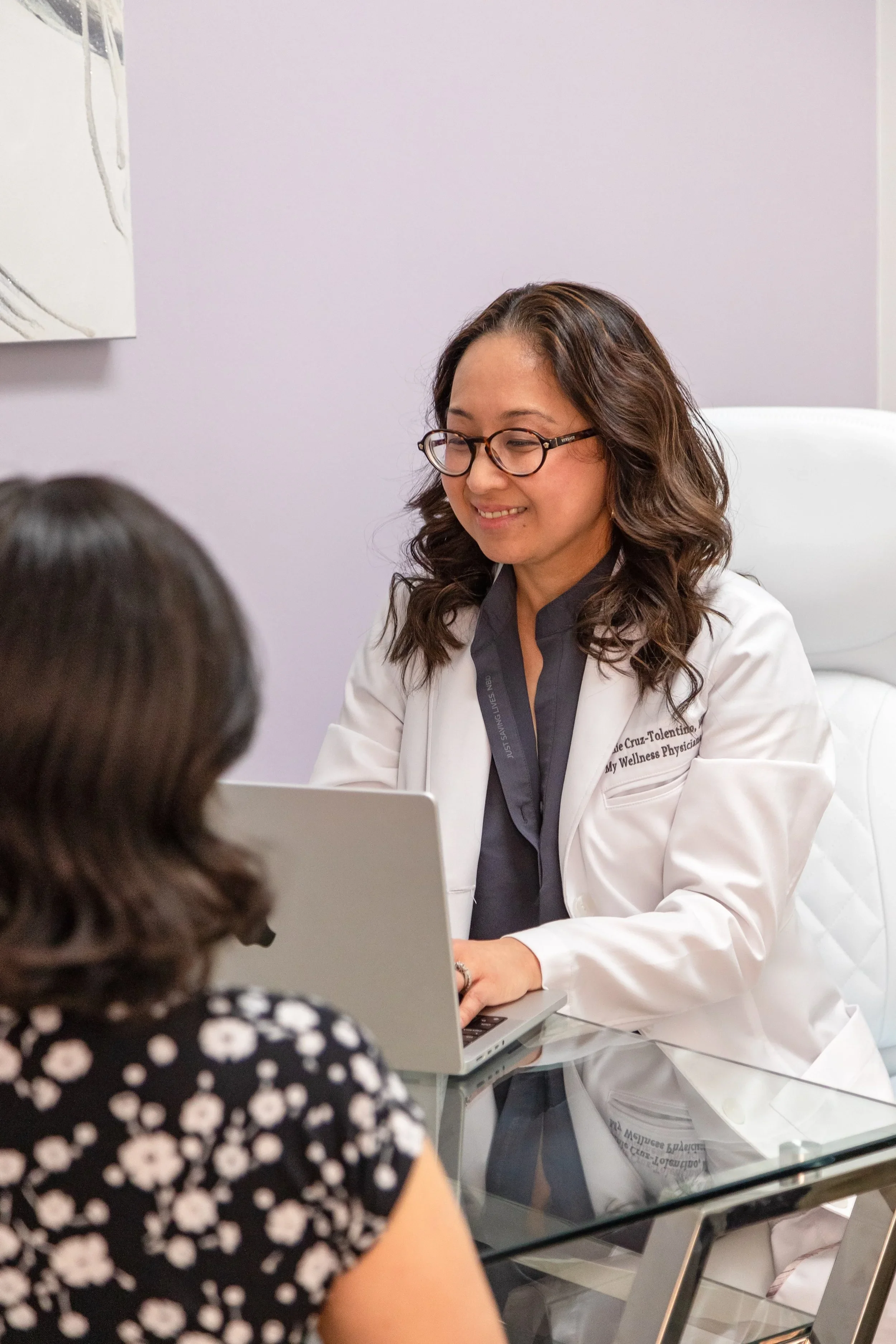
You’ve done everything right. Your body still isn’t responding.
You’ve dieted, exercised, and followed every plan, yet your legs, hips, or arms stay the same while the rest of you changes. Maybe they ache, bruise easily, or feel heavy by the end of the day. And when you’ve asked for help, you may have been told to simply eat less and move more. Lipedema is a real, chronic condition that is often overlooked or mistaken for ordinary weight gain, which leaves many women searching for answers for years. It isn’t a lack of willpower, and it isn’t your fault. You deserve a physician who recognizes what’s happening and a plan built for how your body actually works.
What is Lipedema?
Lipedema is a chronic condition in which fat builds up evenly on both sides of the body, most often in the legs, hips, and buttocks, and sometimes in the arms.
This fat behaves differently from ordinary fat. It can ache, feel tender to the touch, and bruise with very little contact. It also tends to stay put through dieting and exercise, so many women slim down elsewhere while these areas stay noticeably larger.
Recognizing Lipedema is the first step toward the right diagnosis and care, and away from years of being told to "just lose weight."

Up to 11%
of women worldwide may have Lipedema, roughly 1 in 9.
How common is Lipedema in women?
Lipedema is far more common than most people realize. Yet it's regularly missed or labeled as obesity, which can delay the right care for years.
Knowing its pattern helps women get diagnosed sooner: fat on both sides of the lower body, hands and feet that stay slim, and tissue that's tender and bruises easily.
What causes Lipedema?
The exact cause isn't fully known. Research points to three factors working together.
Genetics
Lipedema often runs in families, which points to an inherited link.
Hormonal Shift
It often begins or worsens during puberty, pregnancy, perimenopause, or menopause.
Lymphatic factors
Changes in how fluid moves through the tissue may play a role.
Does Lipedema run in families?
Yes. Family history is one of the strongest clues. Many women with Lipedema have a mother, grandmother, or sister with the same body shape or symptoms.
If Lipedema runs in your family, you may be able to spot the early signs and get evaluated sooner.

What are Lipedema nodules and lobules?
Lipedema fat feels different from ordinary fat. These two changes are part of the reason.
Nodules
Small, firm areas in Lipedema fat, just under the skin. They can feel like grains of rice or peas and are often tender. Nodules give the skin its uneven texture and can make the legs feel heavy or sore, especially after standing for a long time.
Lobules
Larger pockets of fatty tissue that bulge out from the surface, often around the thighs and knees.
Where does Lipedema fat collect?
Lipedema is categorized into five main types based on the specific anatomical locations of abnormal, symmetrical fat buildup.
The 5 Types of Lipedema
-
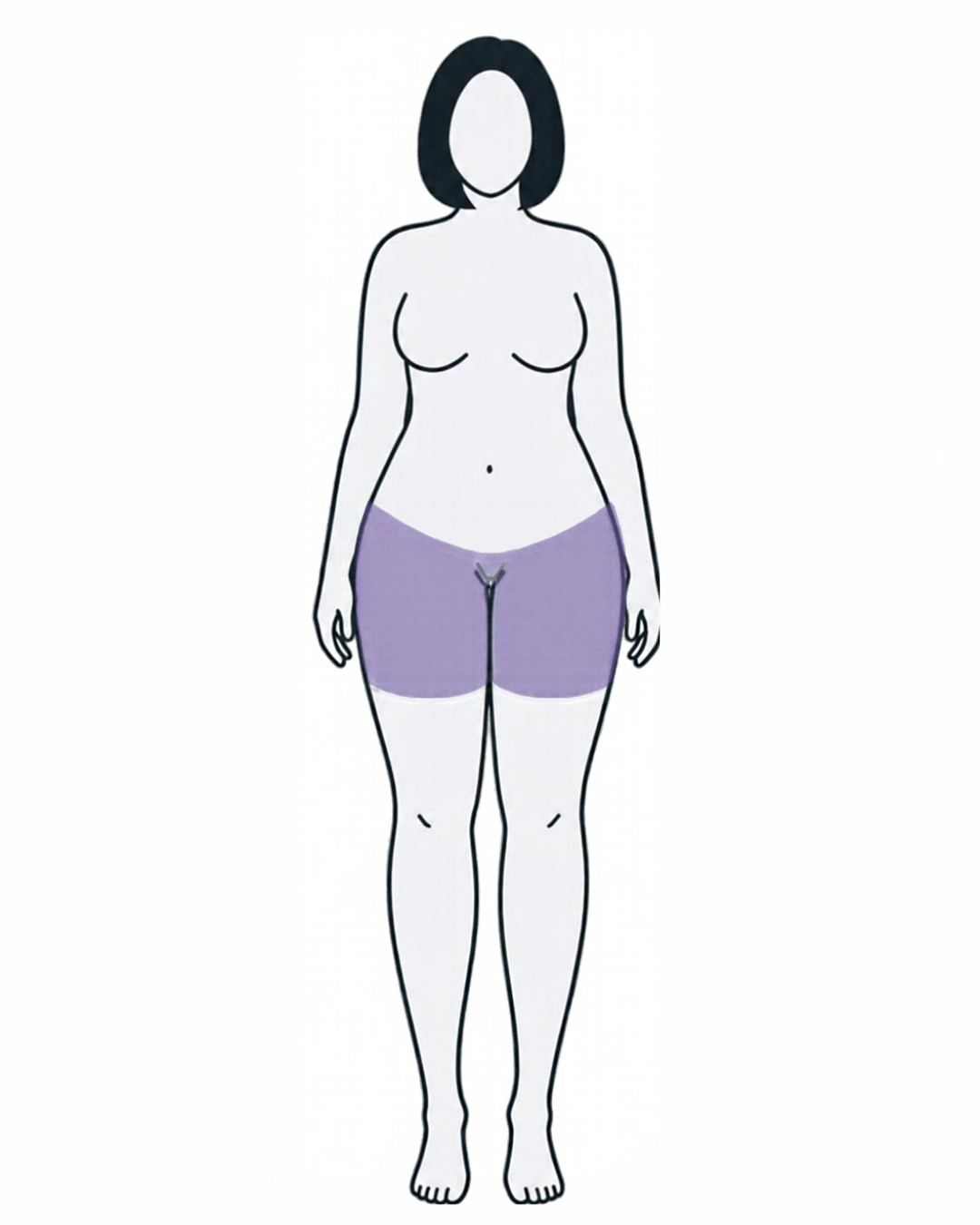 Type I
Fat accumulates in the pelvis, hips, and buttocks, often creating a "saddlebag" appearance.
-
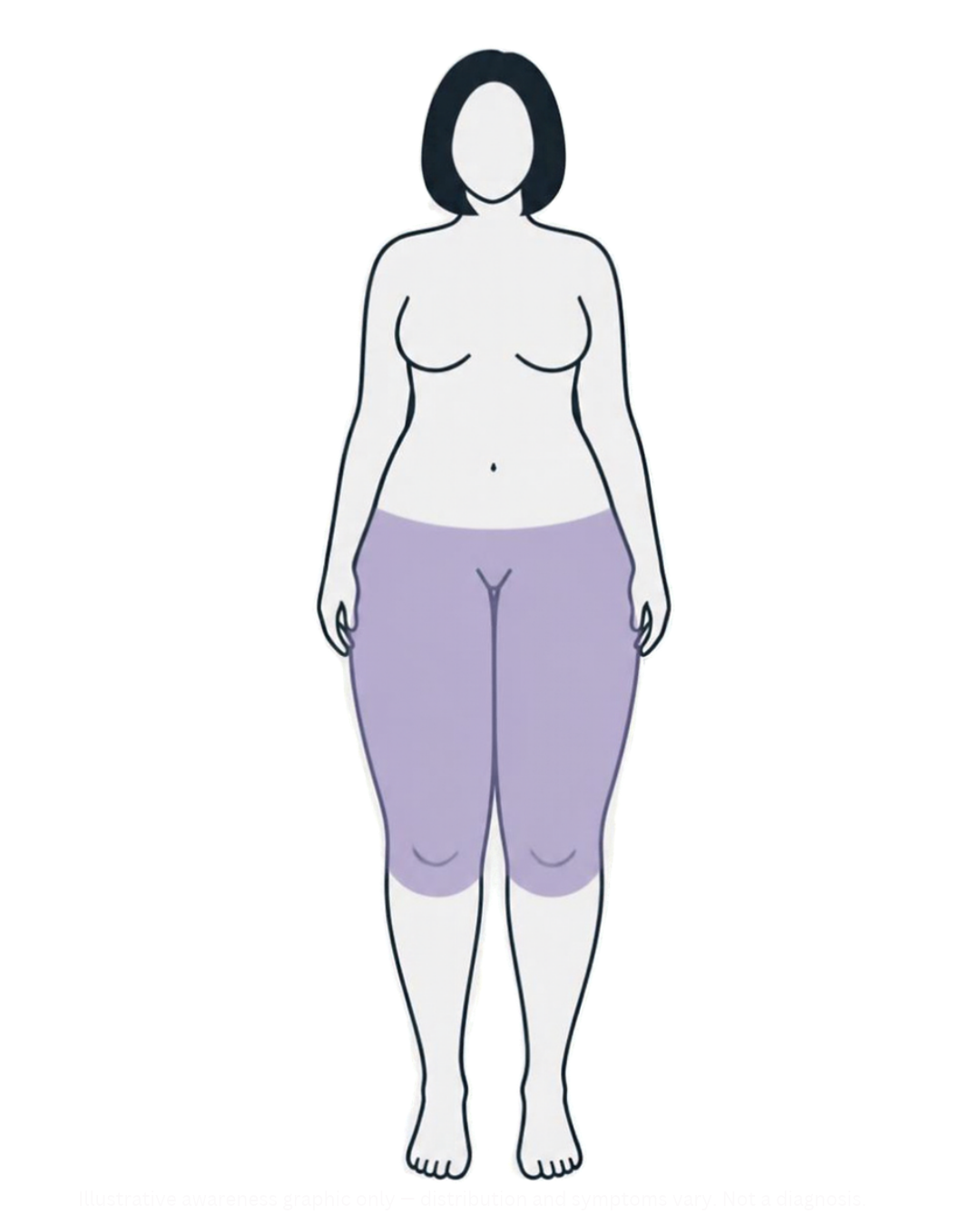 Type II
Fat extends from the buttocks and hips down to the knees, frequently forming a fat pad around the inner knee.
-
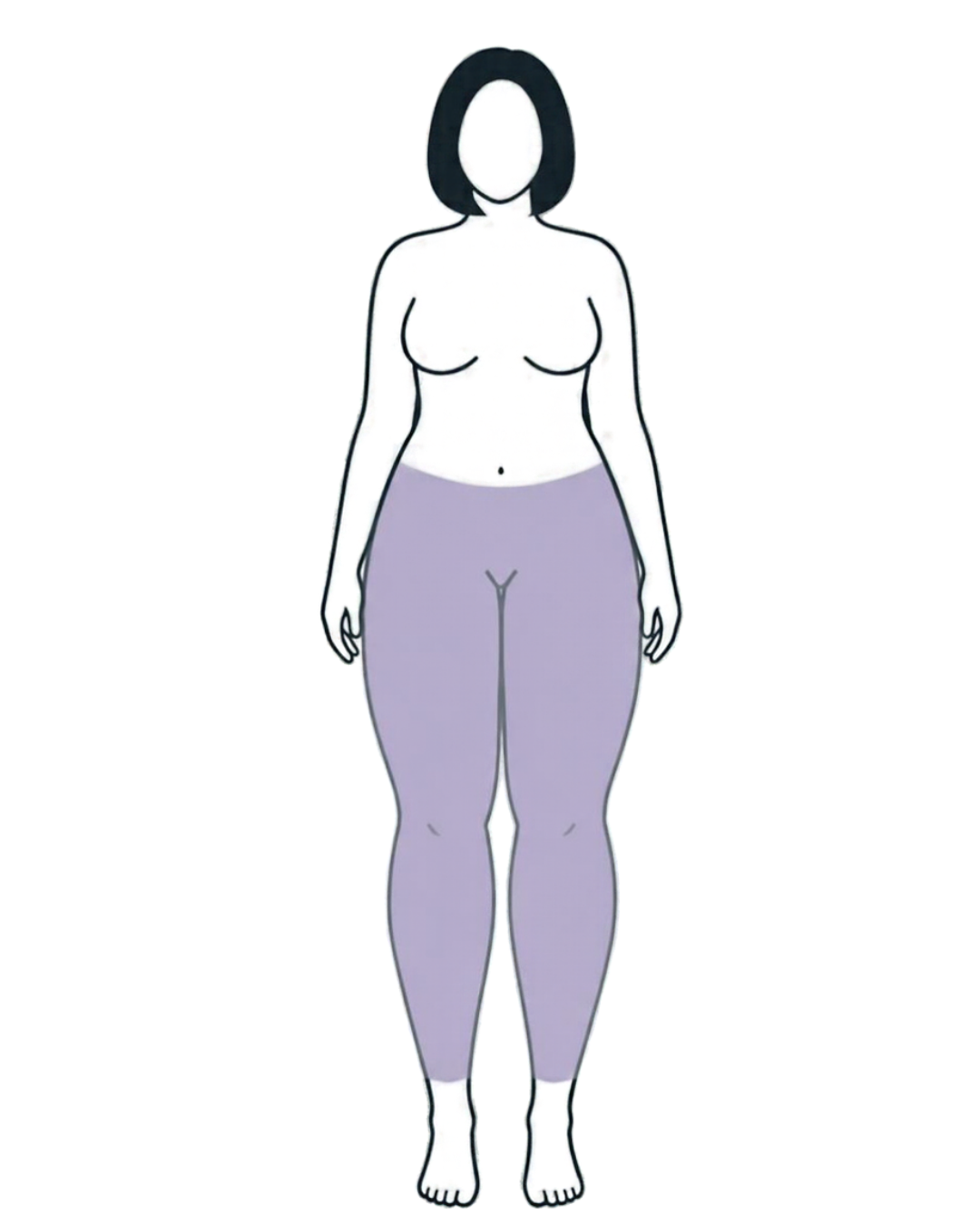 Type III
Fat extends from the buttocks all the way down to the ankles. The most common type, it affects the entire leg while sparing the feet.
-
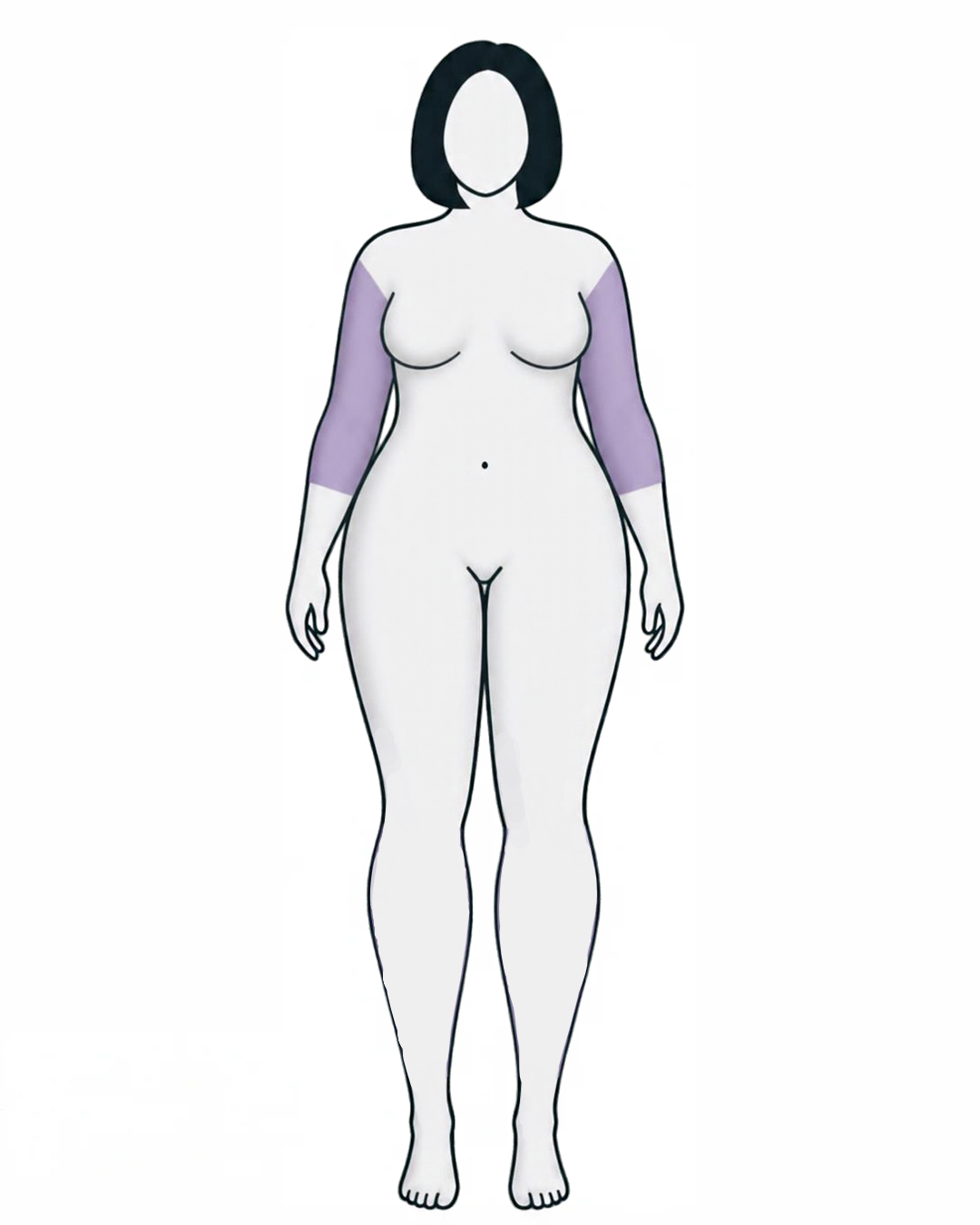 Type IV
Fat affects the arms, typically from the shoulders down to the elbows or wrists.
-
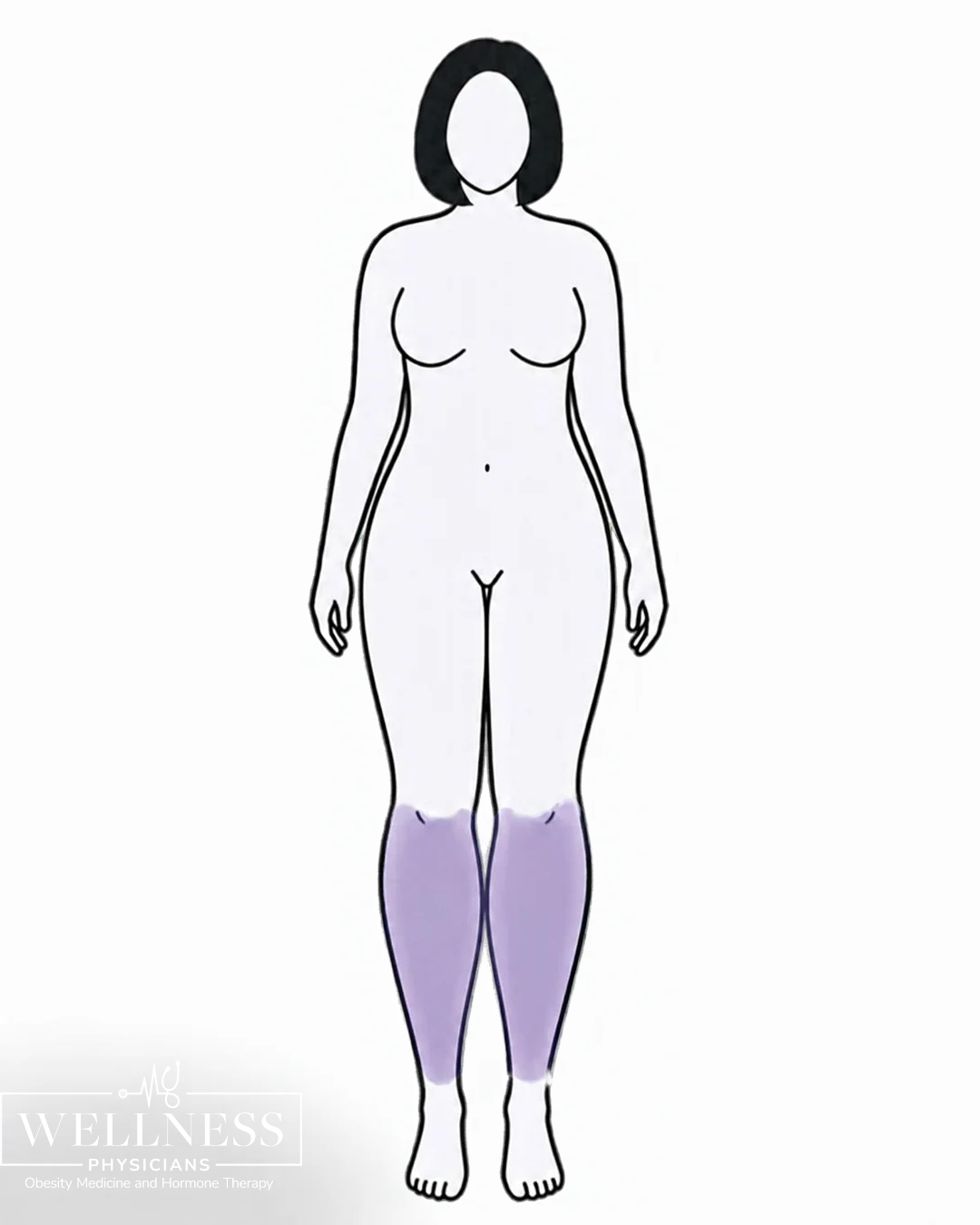 Type V
Fat is isolated to the lower legs, from the knees down to the ankles, leaving the thighs and hips unaffected.
It is common for a person to experience an overlap of more than one type. It's symmetrical, so both legs or both arms are affected in a similar way. This pattern is one of the clearest ways to tell Lipedema apart from obesity or lymphedema.
The Stages of Lipedema
Lipedema is a fat disorder, but in advanced stages it can slow lymphatic flow and lead to lipolymphedema. That can bring swelling, heaviness, and skin changes. Caring for lymphatic health is an important part of managing Lipedema and preventing complications.
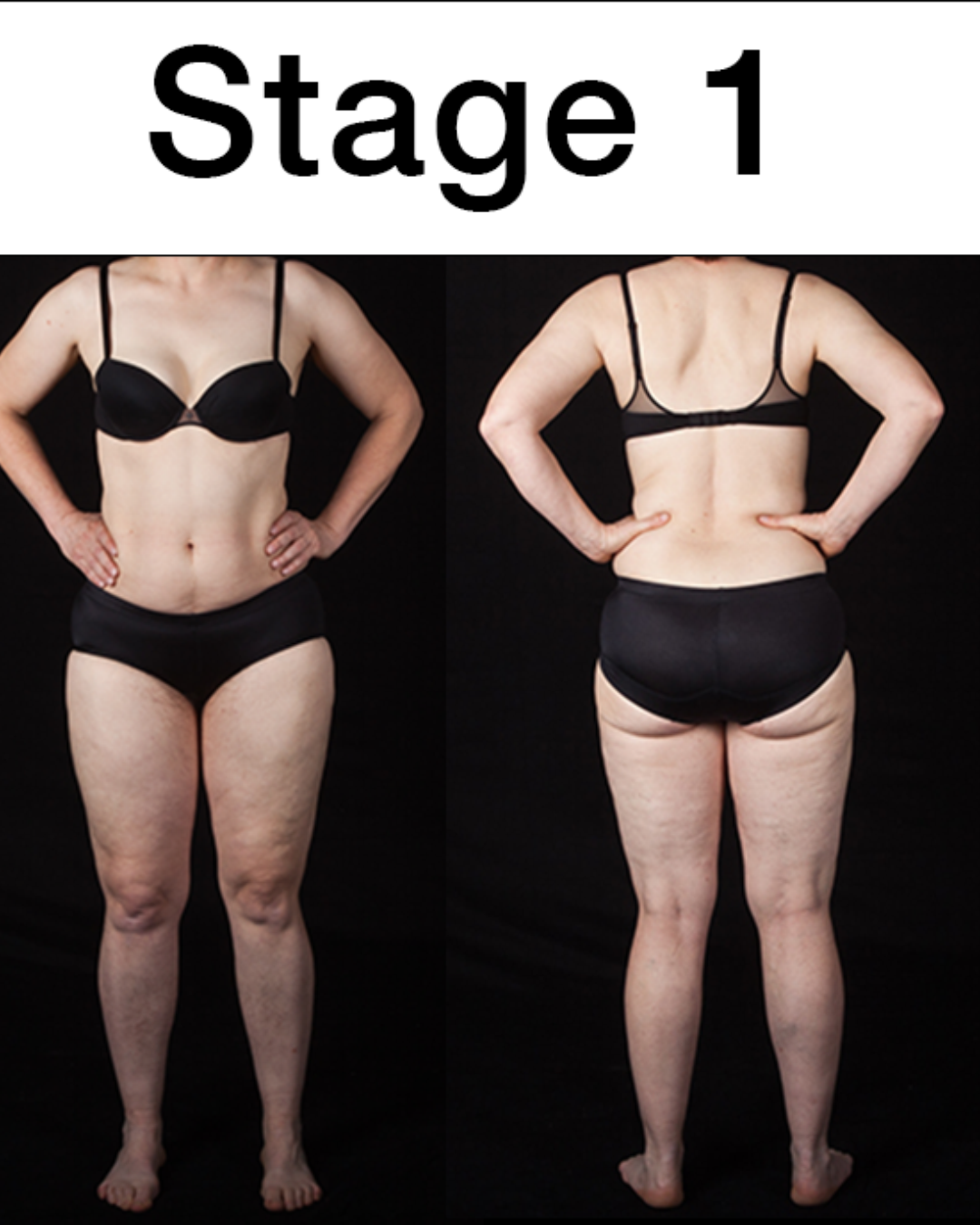
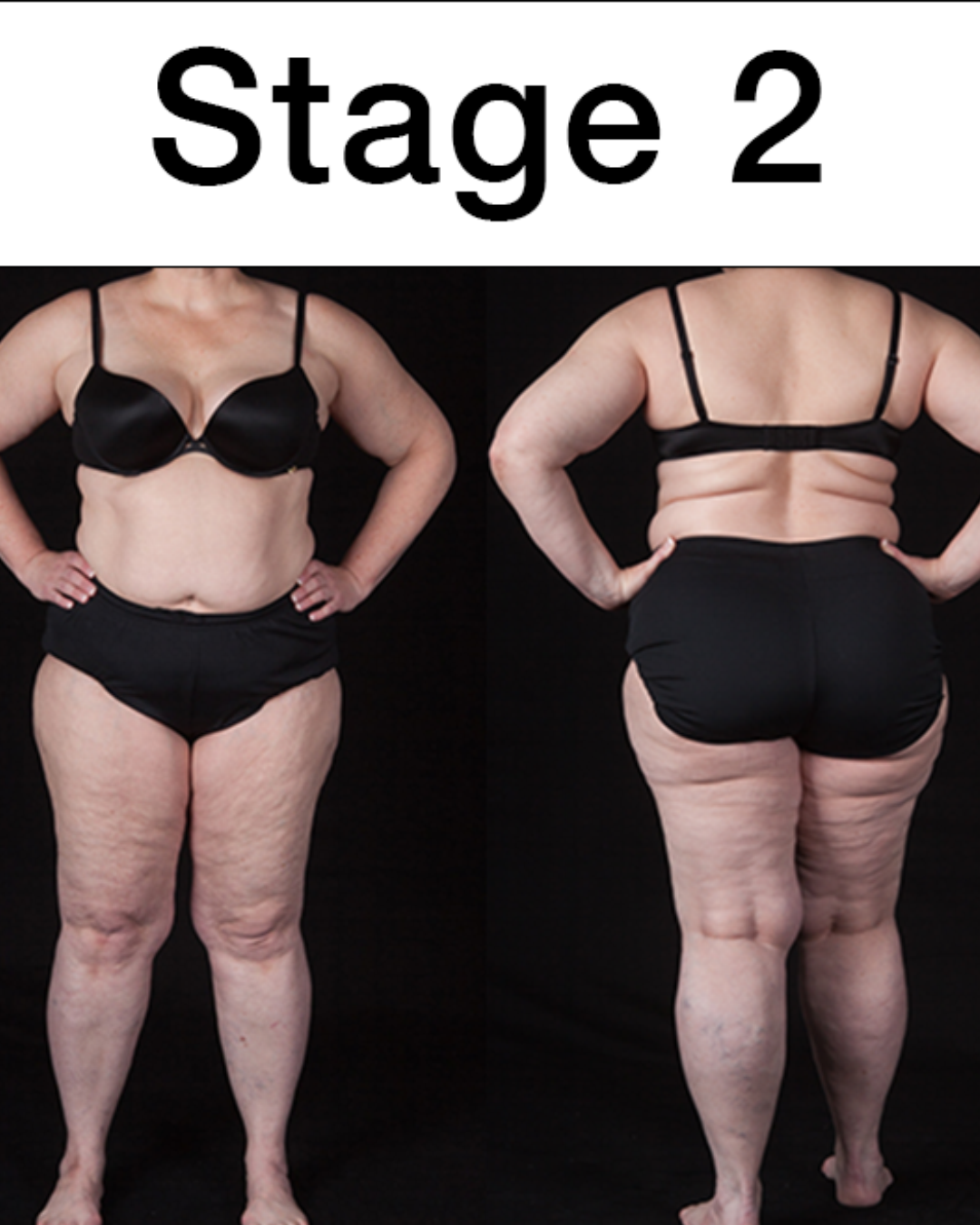
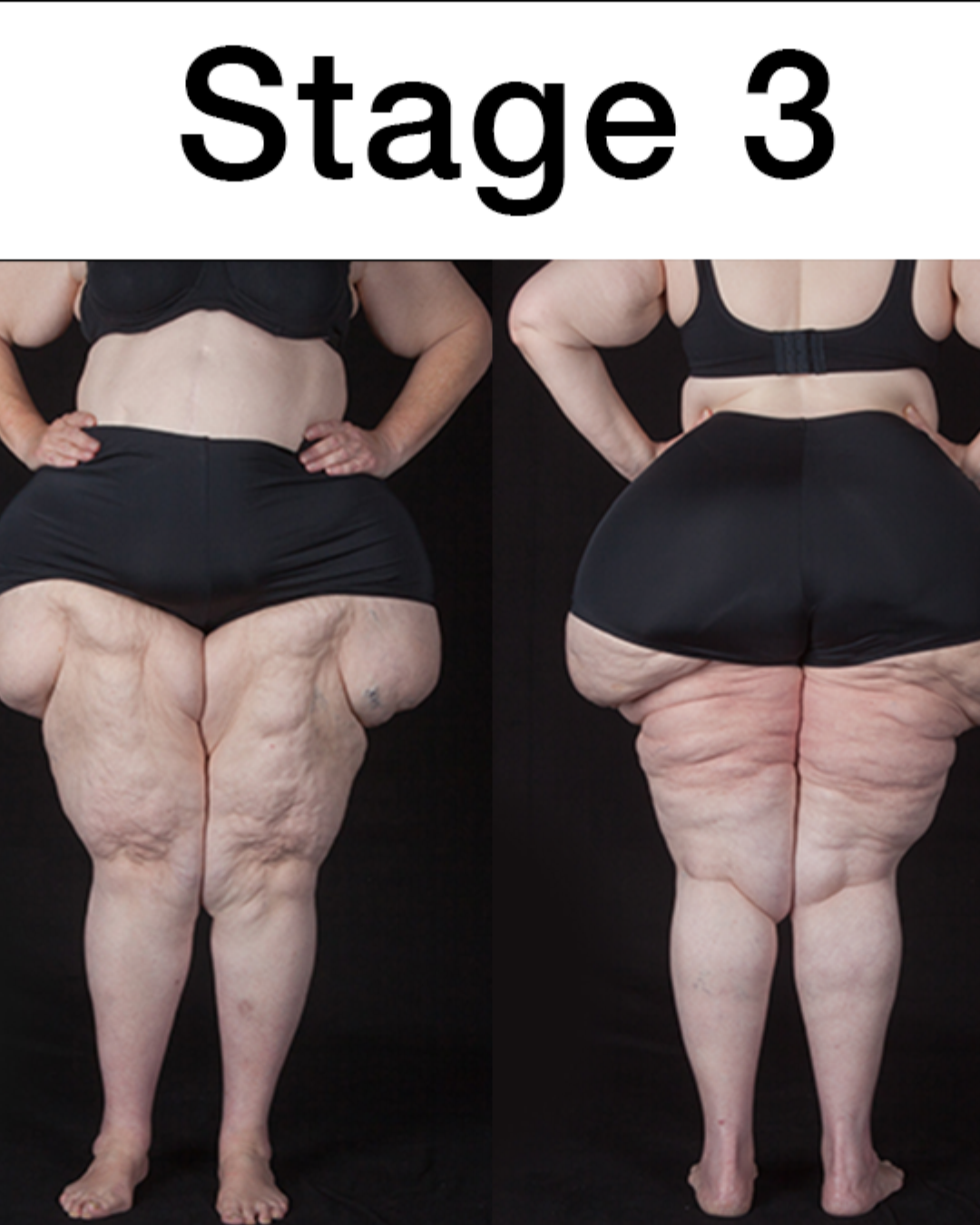
Images are illustrations for education, not patient photos.
Photo credit: Lipedema Foundation
What are the early signs of Lipedema?
Catching Lipedema early helps manage symptoms, slow progression, and open up treatment options such as compression therapy or, for some women, surgery.
- Fat on both sidesSymmetrical build-up in the legs or arms.
- Pain and bruisingTenderness, aching, or bruising with light contact.
- Heavy, tired limbsLegs or arms that feel heavy or fatigued.
- Little change with dietingThese areas barely shrink with diet or exercise.
How is Lipedema different from normal fat?
Because Lipedema fat behaves differently, it needs a specialized evaluation, not a standard weight loss plan.
Lipedema Fat
- Usually the same on both sides of the body
- Often painful or tender to the touch
- Bruises easily
- Feet and hands are usually spared
- Can feel lumpy, with small firm nodules
- Changes little with diet and exercise
Normal Body Fat
- Varies with genetics, hormones, age, and lifestyle
- Not typically painful or unusually tender
- Doesn't bruise more easily than usual
- Can be spread anywhere, including hands and feet
- Feels soft and even
- Usually responds to diet and exercise
How we evaluate and treat Lipedema
- A thorough evaluationDr. Cruz-Tolentino reviews your health and family history and examines fat distribution, tenderness, nodules, and joint mobility.
- A clear diagnosisYou'll learn whether it's Lipedema, which stage and type, and what else may be contributing.
- A personalized planOptions may include compression, movement and physical therapy, lymphatic therapy, nutrition support, and weight management when obesity is also present.
- Coordinated careThrough The LiLy Collaborative, we work with trusted specialists and refer to surgical experts when it's the right next step.
You don't have to figure this out alone
Because care isn't only clinical; patients need community too.
See upcoming LiLy SocialsThe LiLy Collaborative
Founded by Dr. Cruz‑Tolentino, a network of specialists in Northern Virginia who work together on Lipedema care, including a Certified Lymphedema Therapist, a vascular and vein specialist, a registered dietitian, a mental health provider, a plastic surgeon who specializes in lipedema, and other specialists.
LiLy Socials
Free in-person support group in Leesburg. Connect with others navigating the same diagnosis, share your story, and learn from specialists, all judgment-free.
Frequently asked questions.
Answers about visits, cost, and Lipedema care at My Wellness Physicians in Leesburg, serving Loudoun County and Northern Virginia.
Ask a questionDo you accept insurance?
My Wellness Physicians is a cash-based practice and is out of network with insurance plans.
Your care is built around you, not an insurance company's rulebook. We've made the deliberate choice to remain out-of-network so we can practice medicine the way it should be practiced: with time to listen, flexibility to personalize, and the freedom to recommend what's best for you rather than what's simply covered.
Insurance frequently limits care to standardized, cost-driven protocols. Our independence lets us offer thoughtful, physician-led care and a true partnership in every decision about your health.
Call us and our team will walk you through visit costs.
Do I need a doctor's referral?
No referral is needed. You can call or text 703-777-9355 to book a consultation.
Do you offer telemedicine?
Yes, for patients located in Virginia.
Wondering if it might be Lipedema?
Leave your name and number. Our care team will reach out to answer your questions and help you book a Lipedema evaluation.
- Straight answers about visits and cost
- In person in Leesburg or by telemedicine anywhere in Virginia
- No obligation to book
Request a call back
It takes less than a minute.