
By Dr. Minnie Cruz-Tolentino, MD, FAAFP, DABOM
Board-Certified in Family and Obesity Medicine | My Wellness Physicians, Leesburg, VA
If your legs feel heavy, bruise easily and refuse to change no matter how much you diet or exercise, you may have lipedema. Lipedema is a chronic fat disorder that affects an estimated 1 in 9 women, yet most have never heard the word. Many spend years being told to “just lose weight.”
In this guide, you’ll learn what lipedema is, the most common lipedema symptoms, how lipedema stages and types are classified, how it differs from cellulite, obesity and lymphedema, and which lipedema treatment options actually help.
What is Lipedema?
Lipedema is a chronic, progressive disorder of fat tissue that causes a symmetrical buildup of painful fat, most often in the hips, buttocks, thighs and legs, and sometimes the arms. It affects almost exclusively women and often begins or worsens during hormonal changes like puberty, pregnancy and perimenopause.
Lipedema is not caused by overeating or lack of exercise. It is a recognized medical condition, and it is estimated to affect around 11% of women worldwide. Because it is so often mistaken for obesity, many women wait up to 10 years for a correct diagnosis (Archives of Plastic Surgery, 2025).
Lipedema Symptoms: Signs to Look for
The most common lipedema symptoms include:
• Disproportionate fat on the legs or arms compared with the waist and upper body
• Symmetry, with both legs or both arms affected equally
• Spared hands and feet, often with a “cuff” at the ankles or “bracelet” of fat at the ankles or at the wrists
• Pain or tenderness when the skin is pressed
• Easy bruising without clear injury
• Nodular texture under the skin that feels like rice, peas or marbles
• Heaviness and swelling that worsen by the end of the day or in hot weather
• Fat that resists diet and exercise, even when the rest of the body slims down
Lipedema legs often look column-like, with a sharp change in size at the ankle. Pain is the feature that most clearly sets lipedema apart from ordinary fat or cellulite.
Lipedema Stages and Types
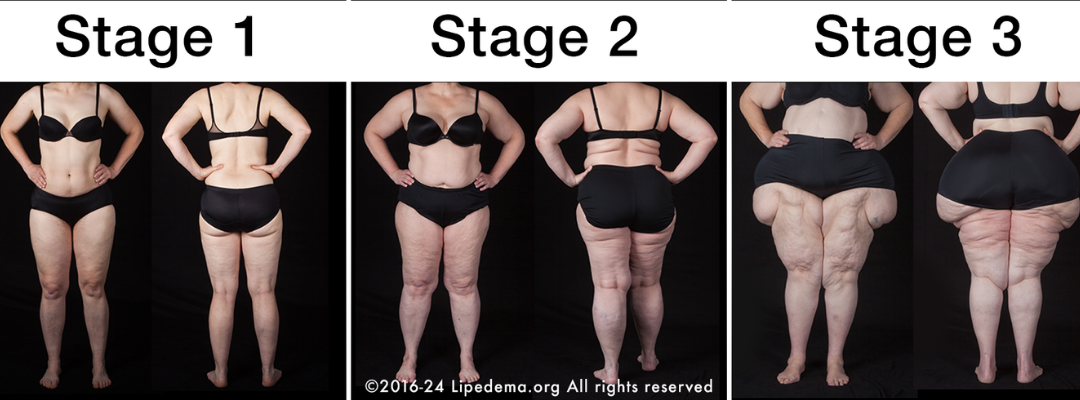
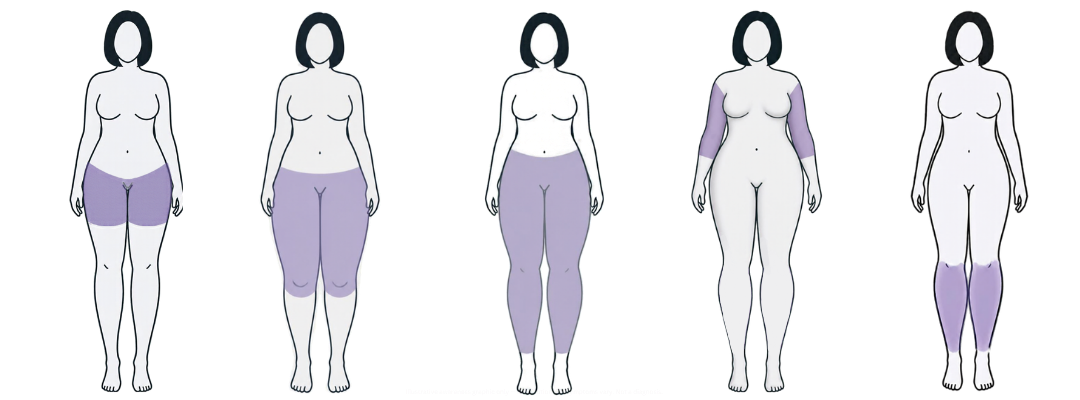
Doctors describe lipedema by stage and type. Stage describe how the skin and tissue have changed, and types describe where the fat is located (Medical News Today).
| Stage | What it looks and feels like |
|---|---|
| Stage 1 | Skin looks smooth; fat feels thickened with small nodules; pain and bruising may already be present |
| Stage 2 | Skin is uneven with dimples and indentations (“mattress” texture); nodules are larger |
| Stage 3 | Tissue is firmer, with large folds or lobes of fat, especially around the thighs and knees |
| Stage 4 (lipo-lymphedema) |
Lipedema plus secondary lymphedema; fluid buildup adds swelling, sometimes in the feet |
Many women have more than one type, such as legs and arms together. Lipedema does not always progress, and early diagnosis and treatment can help slow it down.
| Type | Area affected |
|---|---|
| Type I | Buttocks and hips (“saddlebag” area) |
| Type II | Buttocks to knees, often with fat pads on the inner knees |
| Type III | Hips to ankles, with feet spared |
| Type IV | Arms, with hands spared |
| Type V | Calves mainly (rare) |
Lipedema vs. Cellulite, Obesity and Lymphedema
Lipedema is commonly misdiagnosed as one of these three conditions. Here’s how to tell them apart
| Feature | Lipedema | Cellulite | Obesity | Lymphedema |
|---|---|---|---|---|
| What it is | Painful fat disorder | Skin surface dimpling | Chronic disease of excess body fat | Lymph fluid buildup |
| Where | Legs, hips, arms; symmetrical | Thighs, buttocks | Whole body, including belly | Often one limb |
| Feet and hands | Spared | Not relevant | Involved | Often involved |
| Pain | Common | No | Uncommon | Heaviness, aching |
| Easy bruising | Yes | No | No | No |
| Responds to weight loss | Very little | Somewhat | Yes | Partly |
Lipedema vs. obesity: Obesity fat is spread across the body and shrinks with weight loss. Lipedema fat stays put and is often painful. Many women have both, and both deserve treatment.
Lipedema vs. cellulite: Cellulite is a skin texture change that is common and painless. Lipedema involves the fat itself and causes tenderness and bruising.
Lipedema vs. lymphedema: Lymphedema is swelling from fluid and often affects one limb, including the foot. Lipedema is fat, is symmetrical and spares the feet, though advanced lipedema can lead to lymphedema.
What Causes Lipedema?
The exact cause of lipedema is still being studied. Research points to a combination of genetics and hormones: it often runs in families, and it typically starts or worsens during puberty, pregnancy or perimenopause. Inflammation and changes in small blood and lymph vessels in the fat tissue also appear to play a role.
How is Lipedema Diagnosed?
There is no single blood test for lipedema. Diagnosis is clinical, based on a detailed medical and family history and a hands-on physical exam by a clinician experienced with the condition. Your doctor may also order tests or imaging to rule out lymphedema, vein disease, thyroid problems or other causes of swelling.
Lipedema Treatment Options
There is no cure for lipedema yet, but the right treatment plan can reduce pain, improve mobility and help prevent progression.
• Compression garments fitted for lipedema, often flat-knit
• Manual lymphatic drainage (MLD) and therapy with a lymphatic-trained physical therapist
• Low-impact exercise such as walking, swimming, water aerobics, cycling and yoga
• A lipedema diet built around anti-inflammatory, whole foods, designed with a dietitian
• Medical weight management to treat coexisting obesity, which reduces strain on joints and lymphatics
• Emotional support and community, since lipedema often affects self-esteem and mental health
• Lipedema liposuction (lymph-sparing techniques) for selected patients, performed by an experienced plastic surgeon
Can you lose lipedema fat with diet or GLP-1 medications? Diet, exercise and weight-loss medications reduce regular fat, which can ease symptoms. But they do not reliably remove lipedema fat itself. That’s why a plan that treats both conditions works best.
Lipedema FAQs
Is lipedema hereditary? Lipedema often runs in families. Many patients have a mother, sister, aunt or grandmother with a similar body shape, which points to a genetic link.
Does lipedema go away on its own? No. Lipedema is a chronic condition. Treatment can reduce pain and swelling and may slow progression.
Can you lose lipedema fat? Lipedema fat is resistant to diet and exercise. Weight loss reduces regular fat, while specialized liposuction is currently the main way to remove lipedema fat.
Is lipedema painful? Yes, for most people. Tenderness, aching and easy bruising are among the most common lipedema symptoms.
What kind of doctor diagnoses lipedema? Look for a physician experienced in lipedema, such as an obesity medicine, vascular or lymphatic specialist, who can examine you and coordinate a team approach.
Can men get lipedema? It is extremely rare. Lipedema affects almost exclusively women.
Does lipedema get worse with menopause? Many women notice changes during perimenopause and menopause, since hormonal shifts are a known trigger.
Find a Lipedema Specialist in Leesburg and Northern Virginia
You deserve answers, not judgment. At My Wellness Physicians in Leesburg, VA, Dr. Minnie Cruz-Tolentino, double board-certified in Family Medicine and Obesity Medicine, provides in-person lipedema evaluations for women across Loudoun County and Northern Virginia.
Through The LiLy Collaborative, patients are connected with a team of certified lymphedema therapists, a dietitian, a counselor, vascular and vein specialists, surgical partners and other specialists.. And our free Lily Socials give women a judgment-free place to connect with others who understand.
Schedule your lipedema evaluation today. Call (703) 777-9355 or visit mywellnessphysicians.com. My Wellness Physicians · 1604 Village Market Blvd SE, Suite 119, Leesburg, VA
This article is for educational purposes and is not a substitute for personal medical advice.
Sources
• Lipedema: Clinical Features, Diagnosis, and Management — Archives of Plastic Surgery, 2025