
By Dr. Cruz, MD, FAAFP, DABOM — My Wellness Physicians, Leesburg, VA
Lipedema and cellulite both show up on the thighs and buttocks, and both are far more common in women. That's where the similarity ends. Cellulite is a very common change in how the skin's surface looks. Lipedema is a chronic disorder of the fat tissue itself, and it can cause pain, heaviness, and easy bruising.
Telling them apart matters. Cellulite is a cosmetic concern, while lipedema is a medical condition that is often misdiagnosed and needs its own care plan. This guide explains the difference in plain terms, for women 30+ in Loudoun County and Northern Virginia.
This article is for education and isn't a substitute for an individual medical evaluation.
What is cellulite?
Cellulite is a change in the skin's texture: dimpling, puckering, or an "orange-peel" look. It's reported in about 80–90% of women after puberty, so it's extremely common. It shows up most often on the outer and back of the thighs and the buttocks, and sometimes on the hips, abdomen, and backs of the arms.
The leading explanation involves the fibrous bands that connect the skin to the tissue beneath it. Tension on those bands pulls the skin down in spots, creating dimples. In imaging and tissue studies, the fat under cellulite looked much like fat in skin without cellulite. Cellulite can look more noticeable during high-estrogen times, such as pregnancy, and with weight gain. It's rare in men.
What is Lipedema?
Lipedema is a chronic disorder of fat tissue that affects mostly women. Fat builds up on both sides of the body in the same pattern, out of proportion to the rest of the body, mainly in the hips, thighs, and legs and sometimes the arms. The hands and feet are usually spared.
Unlike cellulite, lipedema is about the fat tissue itself, not just the skin's surface. It often comes with pain described as pressure or heaviness, easy bruising, and fat that doesn't shrink much with diet or exercise. It frequently starts or worsens around puberty, pregnancy, or menopause, and diagnosis can be delayed for years because it's mistaken for obesity or lymphedema.
What about a Lipoma?
A lipoma is different again: a benign, localized fatty lump made of mature fat cells. Because it's localized, it forms a lump in one spot rather than a matching pattern across both legs.
Lipedema vs. cellulite at a glance
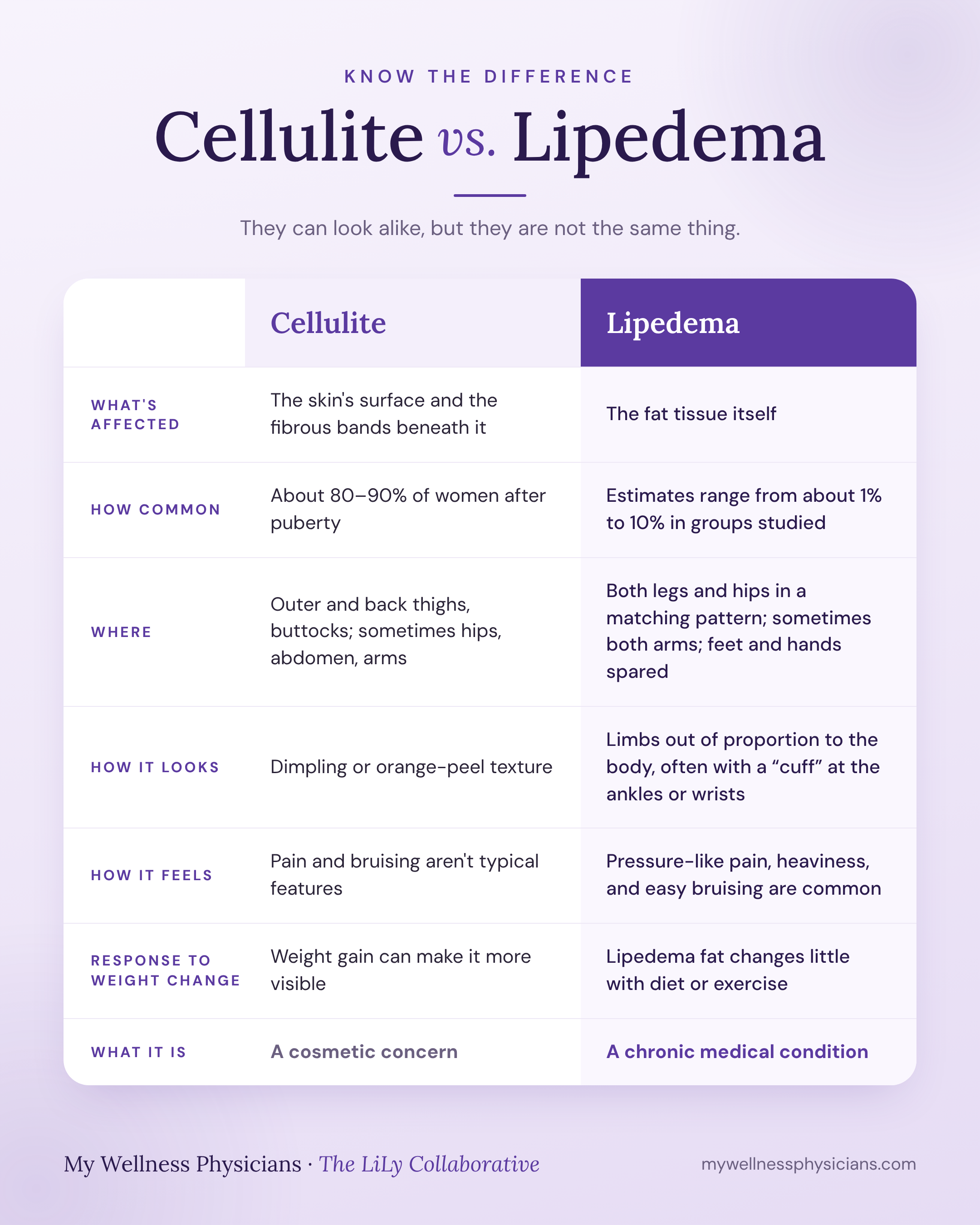
You can have both. Cellulite is so common that many women with lipedema have it too, so dimpled skin by itself doesn't rule lipedema in or out.
Is it lipedema or cellulite? A quick self-check
Cellulite alone usually means a change in how the skin looks. Consider an evaluation for lipedema if you answer yes to several of these:
Are both legs (or both arms) larger than the rest of your body, in a matching pattern?
Do your feet and hands stay slim, with a visible line where the fat stops?
Do your legs ache, feel heavy, or bruise easily?
Has the size of your legs stayed about the same despite diet or exercise that changed the rest of your body?
Did these changes start or speed up around puberty, pregnancy, or menopause?
This checklist can't diagnose you. Lipedema is diagnosed by a clinician through your history and a physical exam.
Why the difference matters for treatment
Cellulite and lipedema are treated in completely different ways.
Cellulite treatments aim to improve how the skin looks. Options include topical products, injections, massage devices, acoustic wave therapy, lasers, radiofrequency, and subcision, a procedure that releases the fibrous bands under the skin. Results vary, and none of these are part of expert recommendations for lipedema.
Lipedema management focuses on symptoms, mobility, and overall health. An international expert consensus published in 2026 recommends a tailored plan that can include:
Compression therapy
Lymphatic therapy (complete decongestive therapy) when it helps
Exercise such as water-based activity, walking, and yoga
Nutrition guidance and managing any co-existing weight
Psychological and social support
Lymph-sparing liposuction for selected patients, done by surgeons experienced with lipedema
Cellulite treatments aren't designed to address lipedema pain or heaviness. That's why getting the right diagnosis comes first. Read more in our guide on how to treat lipedema.
When to get evaluated
See a physician who knows lipedema if your legs are out of proportion to your body, ache or bruise easily, or haven't responded to changes that worked elsewhere. Lipedema diagnosis is often delayed for years. An evaluation gives you a clear answer either way.
Get care right away if one leg suddenly becomes swollen, red, warm, or painful. That isn't typical of lipedema or cellulite and needs prompt attention.
Lipedema evaluation in Leesburg with The LiLy Collaborative
At My Wellness Physicians, Dr. Cruz, who is double board-certified in Family Medicine and Obesity Medicine, evaluates lipedema in person through The LiLy Collaborative, our lipedema and lymphedema program.
A clear answer. A full history and hands-on exam to tell lipedema apart from cellulite, obesity, and lymphedema, and to stage it if it's present.
A plan built around you. Weight and metabolic health, hormone health, and lipedema care considered together.
A local team. Lymphatic physical therapists, a dietitian, a counselor, cardiology, and vein care in Northern Virginia.
Community. Free, judgment-free LiLy Socials for women navigating lipedema and lymphedema.
Book a consultation
Not sure whether it's cellulite or lipedema? Get a real answer. Schedule an evaluation with Dr. Cruz.
My Wellness Physicians — The LiLy Collaborative 1604 Village Market Blvd SE, Suite 119, Leesburg, VA Call (703) 777-9355 or book at mywellnessphysicians.com
Book your consultation.
References
Friedmann DP, Vick GL, Mishra V. Cellulite: a review with a focus on subcision. Clinical, Cosmetic and Investigational Dermatology, 2017;10:17–23. Full text — source for cellulite prevalence, locations, appearance, fibrous septae, fat morphology, estrogen and weight effects, rarity in men, and treatment options.
Lipedema: Clinical Features, Diagnosis, and Management. Archives of Plastic Surgery, 2025;52(3):185–196. PMC12081092 — source for lipedema features, pain and bruising, the cuff sign, diet resistance, onset timing, delayed diagnosis, and clinical diagnosis.
Galia S, et al. The lipedema common case report form as a research tool. Frontiers in Global Women's Health, 2026;7. Article — source for the 1–10% prevalence range.
Kruppa P, et al. Lipedema World Alliance Delphi Consensus-Based Position Paper on the Definition and Management of Lipedema. Nature Communications, 2026;17:427. PDF copy — source for the lipedema management list.